Japan Discovery How Japanese people think “Shoes Off: An Enduring Japanese Custom(靴を脱ぐ理由)”
Not wearing shoes inside the house is a givenin Japan. Even as shikibuton(floor mattresses) gave way to beds, tatami(straw mats) to hardwood flooring, and zori(traditional sandals) to shoes, people firmly take off their footwear indoors. This practice has not changed, even with the modernization and Westernization of lifestyles in recent history. Entering a room while wearing shoes, known as dosoku(literally “earth shoes"), is considered a deeply impolite act.

- 1. Entering a Beautiful Japanese Home: The Etiquette
- 2. Japanese Homes: Built on a Raised-Floor Architecture
- 3. A Nation of Spiritual Practices: Keeping Kegare(Pollution/Defilement) Out
- 4. Kyakka Shōko(Look to Your Feet): The Place to Take Off Your Shoes
- 5. 日本人の考え方 靴を脱ぐ理由
- 6. 美しい日本家屋の上がり方
- 7. 日本家屋は高床式建築
- 8. 呪術の国 穢(けがれ)を家に入れたくない
- 9. 脚下照顧(しょうこきゃっか)は靴を脱ぐ場所
Entering a Beautiful Japanese Home: The Etiquette
Everything in Japan is formal, and even taking off your shoes has its manners and rituals. Children are taught this by their mothers from a young age. Let’s recreate a scene from the Shōwa era (1926–1989) when a mother, Mrs. Yamana, and her daughter, Tomoko, visit a friend, Mrs. Isshiki.
In those days, front doors were often unlocked. The mother would slide open the door and call out to the house.
(Sound of the sliding door opening)
“Hello, it’s Yamana. Excuse us for intruding." (Konnichiwa, Yamana desu. Ojamashimasu.)
Mrs. Isshiki, the friend, quickly rushes out from the back of the house.
“Welcome! Please, come right in, come right in!" (Irasshai,-yō okoshiyasu. Sa~a hayou, agatte, agatte.)
“Thank you, we’ll come up now." (arigatō, agara shite morau wa ne.)
The mother and daughter take off their shoes and step up onto the raised floor (agarikamachi). Three-year-old Tomoko starts to head further into the house, leaving her shoes as they are.
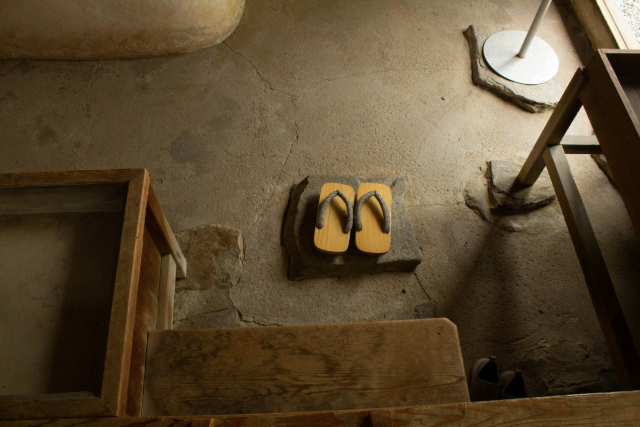
“Wait a minute, Tomo-chan. You have to line up your shoes. Line them up just like Mom did, with the toes pointing towards the entrance. Understand?" (Chottomatte, Tomo-chan, kutsu o soroe n to akan e. Okāsan mitai ni kutsu o soroetena, tsumasaki o genkan no hō e mukeru n yo. Wakaru.)
“Yes," (Wakaru) Tomoko replies.
“And make sure you don’t turn your bottom toward the host when you do it."(Sono toki, o shiri o oie no hito ni muken yō ni sen tona)
“Uh-huh."(un)
“That’s a good girl, Tomo-chan. You did so well!" (honma erai nā, Tomo-chan. Yō deki hatta.) Mrs. Isshiki praises her.
Tomoko looks small but proud. This is how Japanese children have learned the etiquette of shoe removal.
A well-mannered Japanese person aligns their shoes with the toes pointing toward the exit. It is also essential to be careful not to turn your back to the hosts while doing this. Mastering this is a mark of elegance. Having the shoes neatly aligned and facing the exit is also practical for when you leave, allowing you to slip them on quickly without having to bend down or awkwardly move them with your feet. Aligning footwear is a custom that combines graceful movement with practical efficiency.
This is similar to how people park cars. Japanese people usually back into parking spaces at supermarkets or restaurants. While it takes a little more effort to enter the space, it makes exiting much easier and safer. This is another example of the Japanese pursuit of rational efficiency. The cars neatly lined up in a parking lot look just like the shoes aligned at a home’s entryway.
Japanese Homes: Built on a Raised-Floor Architecture
Why do Japanese people take off their shoes? A common reason given is the climate. Japan is part of the Asian Monsoon region, which spans East, Southeast, and South Asia. The monsoon winds carry a large amount of moisture from the sea, resulting in heavy rainfall and high humidity.
While Southeast Asia is warm and humid all year, Japan has four distinct seasons and cold winters. Nevertheless, it endures the humid, drizzling rainy season (tsuyu), followed by an intense summer. The Japanese summer is so hot and humid that people from tropical countries often find it unbearable. Young women carry small portable fans, the elderly drink rehydration drinks like Pocari Sweat or Aquarius, and construction workers prevent heatstroke by wearing jackets that inflate like balloons with built-in fans.
In this hot and highly humid region, raised-floor architecture developed to make living more comfortable. Creating a space between the ground and the floor allows air to circulate, lowering the room temperature and humidity. Japanese homes are fundamentally built on this raised-floor style. Although Japan is far from Southeast Asia, people arrived via the Kuroshio Current, migrating from Southeast Asia through the Philippines, Taiwan, Okinawa, and Kyushu, and likely brought this architectural style with them.
It turned out that this raised-floor design, intended for hot and humid conditions, also worked well in the cold winter. The space underneath the floor helped block the cold air rising from the ground. This architectural style was well-suited to the Japanese climate. The only downsides were that animals might take up residence underneath, or ninjas might sneak in to eavesdrop! By the Nara period, famous structures like the Shōsōin treasure house, temples, and shrines were built with raised floors. In the Heian period, noble residences were built in the shinden-zukuri style, which became the prototype for Japanese domestic architecture. Since then, both nobles and commoners have lived lives where they remove their shoes or clogs indoors.
Okay, that makes sense. But a question arises: The floor is only about 30 cm (1 foot) above the ground. Wouldn’t it be easy to step up while wearing shoes? That’s true, but taking off shoes before stepping onto the floor has other benefits. If you wear shoes, the floor will get dirty with mud and soil stuck to the soles.
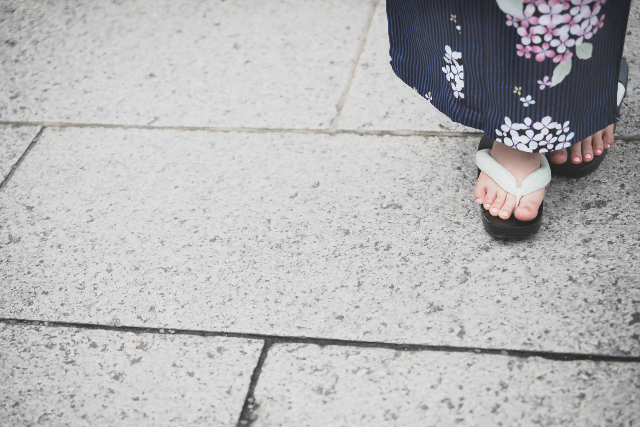
In the hot and humid summer, people want to be barefoot. They want to take off their stuffy shoes and socks and relax barefoot. It would be unpleasant if the floor were dirty. Many rooms have tatami mats to counter humidity, and if soil gets into the weave of the tatami, it is extremely difficult to remove. By keeping it clean, the space remains comfortable and reduces the effort required for cleaning. For Japanese people, walking on a clean floor with bare feet is a pure moment of bliss.
A Nation of Spiritual Practices: Keeping Kegare(Pollution/Defilement) Out
Today, however, shoes rarely get muddy in modern cities. You won’t see pub floors, libraries, or office floors covered in dirt; a robot vacuum cleaner can handle the mess. Yet, the Japanese lifestyle hasn’t shifted to one where people keep their shoes on inside, like in the United States. This suggests there must be another reason.
This reason is related to Japan being a nation of spiritual practices. To Japanese people, “dirt" is not just the physical mud and soil. Japan is the land where eight million gods (Yaoyorozu no Kami) reside. Besides gods, there are all sorts of yōkai (monsters/spirits) and chimimōryō (evil spirits). There are also vengeful spirits (onryō) and ghosts. As the Onmyōji (court diviner) Kamo no Yoshinori once said, “Ordinary people can’t see them, but these things exist in the world. It is enough just to know that they are there."
Moreover, old tools can become Tsukumogami, beings that are somewhere between gods and yōkai. A cat that lives long enough becomes a Nekomata (a fork-tailed monster cat). Historical figures like Sugawara no Michizane and Emperor Sutoku were elevated from human status to gods. There are also the God of Poverty (Binbōgami) and the God of Plague (Yakubyōgami). In short, the world is full of spiritual beings. Some of these beings can have a negative impact on people, leading to bad luck or making them prone to illness.
Once a person leaves the house, the possibility of encountering these malicious entities increases. Historically, the Japanese feared encountering such things. If encountered, they might cling to the body. Japanese people call these negative attachments Kegare (defilement, pollution, or spiritual impurity)and strongly dislike them. If they realize they have been contaminated, they perform misogi(ritual purification) or oharai(exorcism) to remove it. Misogiusually involves washing away the Kegare with water.
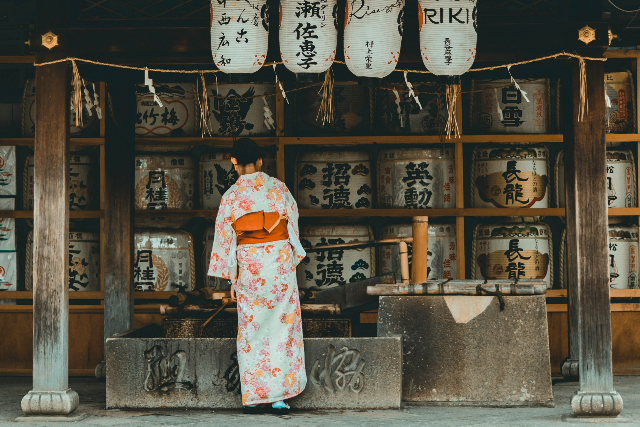
Every Shinto shrine has a water purification font (chōzuya)at the entrance. Visitors wash away any $Kegare$ or ill will attached to their bodies before praying. This is a form of misogi. The same principle applies at home: people do not want to bring anything bad inside. So, where do these things attach themselves? People walk everywhere. That’s right—it is on the soles of the shoes, which are in contact with the ground, that $Kegare$ is most likely to attach, along with physical dirt. If you step inside with contaminated shoes, the Kegare enters the room. People remove their shoes to prevent and containthat spiritual impurity in the doma(earthen floor entrance).
Kyakka Shōko(Look to Your Feet): The Place to Take Off Your Shoes
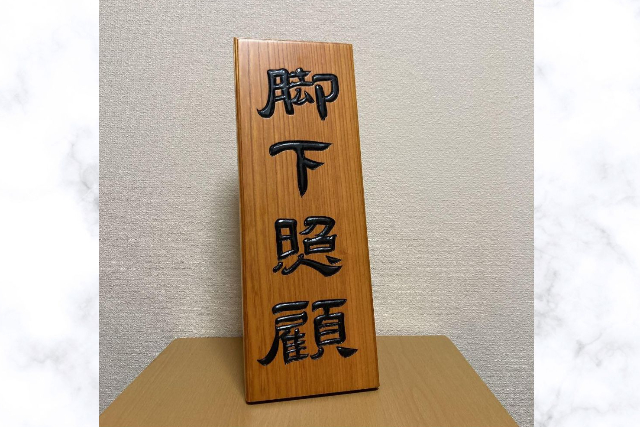
In most homes, you can tell where to take off your shoes because they are already lined up at the entrance. However, the spot can be less obvious at shrines, temples, traditional inns (ryokan), or public facilities. In such places, you will often find signs or placards that say “土足厳禁" (Dosoku Genkin – No Street Shoes Allowed) or “脚下照顧" (Kyakka Shōko), “照顧脚下" (Shōko Kyakka), or “看脚下" (Kanka Kyakka).
Dosoku Genkin literally means you must not step onto the raised area while wearing street shoes.
Kyakka Shōko, Shōko Kyakka, and Kanka Kyakka are originally Zen Buddhist terms. Kyakka means “at your feet," and Shōko or Kan means “to look" or “to attend to." Kyakka Shōko literally means “Look to your feet." The deeper meaning is a call to self-reflection and discipline, urging one to examine one’s own self and diligently pursue one’s practice.
However, when this phrase is displayed on a sign, it simply means to “mind your feet." In other words, when you see this sign, take off your shoes.
The Japanese custom of removing shoes is based on a blend of practical rationality (keeping the living space clean) and a spiritual reverence (fear of bringing in spiritual impurities). Therefore, the “No Street Shoes" rule must be strictly followed.
日本人の考え方 靴を脱ぐ理由
家の中で靴を履かない。日本では当たり前のことですね。それは近代になって生活様式が欧米風になっても変わりませんでした。敷布団がベッドに、床が畳からフローリングになっても、草履が靴に変わっても断固として靴を脱ぎます。靴を履いたまま部屋にあがるのは「土足」といって大変失礼な行為になります。
美しい日本家屋の上がり方
なんでも堅苦しい日本のことですから、靴を脱ぐにのにも作法があります。子供たちはそれを小さい頃に母親から習います。昭和の時代、母と娘が友人宅を訪問したときの様子を再現してみます。お母さんは山名さん、娘は智子ちゃん、お友達は一色さんと仮にしておきます。
当時は玄関に鍵を掛けませんでした。母親は引き戸を開けながら家の中に声をかけます。
ガラガラ・・・戸を開ける音
「こんにちわ、山名です。お邪魔します」
家の奥からお友達の一色さんが小走りに出てきます。
「いらっしゃい、ようおこしやす。さぁ早う、上がって、上がって」
「ありがとう、上がらしてもらうわね」
母と娘は靴を脱いで上がり框に上がります。娘の智子ちゃんは脱いだ靴をそのままにして家の奥へ行こうとします。
「ちょっと待って、智ちゃん、靴を揃えんとあかんえ。お母さんみたいに靴を揃えてな、つま先を玄関のほうへ向けるんえ。わかる」
「わかる」智子さんは3歳くらいでしょうか。
「そのとき、お尻をお家の人に向けんようにせんとな」
「うん」
「ほんま偉いなぁ、智ちゃん。よう出来はった。」一色さんが智子ちゃんを誉めます。
智子さんは小さいながらも誇らしげです。日本の子供はこのようにして靴を脱ぐ作法を覚えてきました。
良い躾けをされた人は靴を揃えてつま先を出口に向けます。このとき他の人にお尻を向けないように気ないといけません。これができると上品な人だと評価が上がります。そうすると帰る時に便利です。さっと靴が履けます。屈んで靴を並べ変えたり足で靴のむきを変えたりしないですみます。綺麗な仕草で靴が履けます。履物を揃えるのは、早く美しい仕草で履物を履く合理的なマナーなのです。
日本人は、自動車をスーパーやレストランの駐車場に止めるときもたいていバックで入庫します。入庫の手間はかかりますが出庫のときは前が見えて出しやすい。これも合理性の追求です。駐車場に行儀よく並んだ自動車は玄関に揃えられた靴のようです。

日本家屋は高床式建築
日本人はどうして靴を脱ぐようになったのでしょうか。一つの理由に気候があります。日本はアジアモンスーン地域に属します。この地域は東アジア、東南アジア、南アジアにかけて広がる季節風(モンスーン)の影響を受けます。季節風が海から多量の水分を運んでくるので雨が多く湿度が高いのが特徴です。
日本は四季があり寒い冬がありますが、ジメジメと雨の降る梅雨があり、その後に東南アジアより過酷な夏がやって来ます。日本の夏は熱帯の国からやってきた人が根を上げるほど暑くて湿度が高くなります。若い娘は小型の扇風機で暑さに耐えます。老人はポカリスウェットやアクエリアスを飲んで水分補給をします。現場のおじさんは、送風機付きの上着を丸々と膨らまて熱中症を防ぎます。
この高温多湿の地域は快適な生活の手段として家を高床式にしました。地面と床の間に空間を作り風を通すことで部屋の気温や湿気を下げました。日本の家屋も高床式建築です。東南アジアから離れていますが黒潮に乗ってやってきた人達が伝えたのでしょう。
高床式建築は住んでみると暑い夏だけでなく寒い冬にも具合が良かったのです。床下の空間は地面からの寒気も防ぎました。高床式建築は日本の気候に合っていたのです。奈良時代になると有名な正倉院や寺院が高床式で作られます。平安時代の貴族の屋敷も寝殿造りという高床式で建てられました。貴族の寝殿作りはこの後に日本家屋の原形になります。具合が悪いことは床下に動物が住み着いたり忍者が忍び込んだりするくらいでした。
その頃から貴族や庶民は靴や下駄を脱ぐ暮らしになります。なるほどなぁ。でも疑問が湧きます。床の高さはたかだか地面から30cmくらいです。靴を履いていても簡単に上がれるじゃないか。でも靴を脱げば、靴底についた泥や土で床を汚れるのを防げます。日本の夏は高温多湿なので靴の中は蒸れます。素足が気持ち良い。蒸れた靴や靴下を早く脱いで裸足になりたい。そんなとき床が汚れていたら嫌ですね。
畳が敷かれている部屋もあります。畳の目に土が入るととても取りにくい。だから汚さないことに越したことはありません。日本人にとって、清潔な畳の上を裸足で歩くのは至福の快感なのです。

呪術の国 穢(けがれ)を家に入れたくない
ですがまだ疑問は残ります。現代の都市生活では靴に泥がつくことは殆どありません。泥や土で居酒屋や会社のフロアーが汚れているのを見ることはありません。偶に汚れていてもお掃除ロボットが簡単に綺麗にする程度です。それでも靴を履いたまま家に入る生活様式にならないのはなぜか。
それは日本が呪術の国だからです。日本は八百万の神が住まわれる国です。神だけでなく色んな妖怪や魑魅魍魎もいます。怨霊や霊もいる。陰陽師の賀茂吉憲が「普通の人には見えないが、ああいう物が世の中にはいるのだ。いると知っているだけで良い」と言った物まで住んでいます。
そのうえ神や妖怪は増え続けます。古い道具は長い間放っておくと付喪神という半妖怪になります。猫も長生きすると猫又という妖怪になります。菅原道真や崇徳上皇様は人から神様におなりなりました。貧乏神や疫病神もいる。とにかく日本は霊的な存在で一杯です。そのなかには人に悪い影響を与えるものがいます。人を不運にしたり病気にかかりやすくしたりします。
家から一歩出ると悪い物たちに出会う可能性が大きくなります。出会ったら身体に着いてくるかもしれません。日本人はそのような物を穢(けがれ)と呼び恐れました。それが家に入るのを嫌がりました。人は外に出ると色んな所を歩きます。地面と接する靴底は特に穢が着き易い場所です。穢は靴のに着いて家に入りますが靴を脱げばばそれ以上入ってきません。穢が部屋に入るのを防ぐ、それも靴を脱ぐ理由なのです。だから生活が西欧式になっても靴を脱ぐ習慣はなくならないのですね。
穢が着いたらどうすれば良いのか。禊(みそぎ)やお祓いで落とします。水で穢を流し去るのが禊です。神社は入口に必ず手水舎(ちょうずや)があります。ここの水で身体についた穢を落とし、綺麗になってお参りします。これも禊です。

脚下照顧(しょうこきゃっか)は靴を脱ぐ場所
個人の家は、玄関に靴が脱いであるのでここで脱げば良いと分かります。でも大きな神社やお寺には分かりにくいときが有ります。公共施設や古い旅館も同じような所があります。そんな場所に来たらどうしましょう。心配はありません。そういう場所にはたいてい「土足厳禁」や「脚下照顧」「照顧脚下」「看脚下」と書かれた立て看板が置かれているからです。
「土足厳禁」は文字通り土足を禁止するという意味で靴を履いたまま上がってはいけません。「脚下照顧」「照顧脚下」「看脚下」は禅の言葉です。「脚下」は足元、「照顧」や「看」は見る事です。「脚下照顧」は足元を見なさいです。禅語としての意味は「我が身」や「我が心」を振り返り反省して事に当たれです。
看板になっているときは言葉の通り足元を見ましょう、履物を脱いで下さいの意味です。この看板があるところでは靴を脱がないといけません。
日本人は部屋を汚さない合理性と霊的なものに対する恐れから靴を脱ぐのです。土足厳禁は守らないといけないのです。ご注意を。